
Quick answer
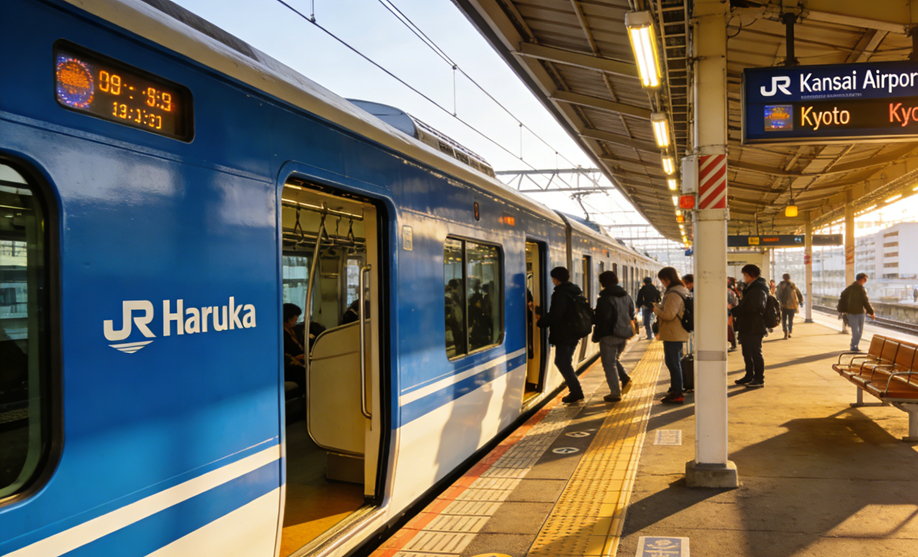
Kansai Airport public transport operates 24 hours, though most rail and bus services run between 05:30 and midnight. The JR Haruka limited express reaches central Osaka in 50 minutes and Kyoto in 80 minutes, while the Nankai rapi:t serves Namba in 38 minutes. Limousine buses connect the airport to major hotels and stations across the Kansai region, and a high-speed ferry runs to Kobe Airport when weather permits. All services depart from clearly signed platforms on the first floor of Terminal 1 and the ground floor of Terminal 2.
More than 30 million passengers move through Kansai Airport annually, and nearly all of them face the same logistical question within minutes of clearing customs: which rail line, bus route or ferry gets them where they need to go without doubling back. The airport was purpose-built in 1994 as an offshore facility to avoid the noise curfews that constrained its predecessor, and that island location defines the infrastructure that connects it to the wider region. Two competing railway operators anchor kansai airport public transport. Japan Railways runs the Kansai Airport Rapid Service on local tracks and the premium Haruka limited express, both departing from the airport station on the second floor of Terminal 1. Nankai Electric Railway operates the standard airport express and the rapi:t limited express, sharing the same platform but diverging in speed and fare. The Haruka tilts toward travelers heading to Kyoto, Shin-Osaka or the northern districts, while the rapi:t prioritizes southern Osaka and Namba. Both railways converge at Shin-Imamiya Station, where route planning becomes critical—boarding the wrong service can add an hour to your journey. Limousine buses offer an alternative for travelers with heavy luggage, late-night arrivals or destinations poorly served by rail. The network spans more than 40 routes, reaching Kobe, Himeji, Wakayama and even rural onsen towns in the mountains. Buses depart from marked bays outside the arrivals hall, with electronic boards displaying real-time updates in Japanese and English. Journey times are subject to expressway congestion, particularly during morning and evening peaks. The Kobe ferry terminal lies across the bay, and the Bay Shuttle high-speed boat covers the crossing in 30 minutes when seas are calm, though typhoon season between August and October often forces cancellations. Navigation inside the terminal matters as much as choosing the right route. Terminal 1 consolidates all rail platforms on the second floor, reached by escalators near the central information desk. Terminal 2, used primarily by budget carriers, requires a free shuttle bus to reach the main railway station—a five-minute ride that can stretch to fifteen during aircraft push-back delays. Signage distinguishes between JR and Nankai ticket gates, and coin lockers near each gate accept yen bills up to ¥1,000. Staffed information counters near the arrivals hall distribute free route maps and can issue IC card transit passes, which work across all operators and eliminate the need to calculate individual fares.
“Two competing railway operators anchor the airport's mainland connection, and boarding the wrong service can add an hour to your journey.”
Public Transport Options for Kansai Airport Transfer
Kansai International Airport is located on an artificial island in Osaka Bay and is served by an extensive network of rail and road transport. Travelers can easily reach the airport via dedicated railway lines or direct bus services from major hubs in the Kansai region.
JR West Kansai Airport Rapid Service to Osaka/Tennoji
Nankai Electric Railway Airport Express to Namba
Kansai Airport Limousine Bus to Osaka/Umeda
Kansai Airport Limousine Bus to Kyoto Station
Operating Hours for Kansai Airport Public Transport
Kansai International Airport remains open 24 hours a day to accommodate continuous flight operations and public transport access. While the airport terminal and transport facilities are accessible at all times, travelers should verify individual train and bus carrier timetables for specific service schedules.
| Monday | 00:00–23:59 | |
|---|---|---|
| Tuesday | 00:00–23:59 | |
| Wednesday | 00:00–23:59 | |
| Thursday | 00:00–23:59 | |
| Friday | 00:00–23:59 | |
| Saturday | 00:00–23:59 | |
| Sunday | 00:00–23:59 |
JR vs Nankai: Which Kansai Airport Public Transport to Choose
Travelers arriving at Kansai International Airport primarily choose between JR West and Nankai Electric Railway to reach the Osaka city center. The best choice depends on whether your final destination is closer to Osaka Station or the Namba district.
| JR West (Haruka/Kanku Rapid) To Osaka/Shin-Osaka |
Top pick Nankai Electric Railway (Rap:t/Airport Exp) To Namba |
|
|---|---|---|
| Primary Destination | Osaka Station/Shin-Osaka | Namba Station |
| Typical Travel Time | 30–50 minutes | 35–45 minutes |
| Service Type | Limited Express/Rapid | Limited Express/Airport Express |
| Frequency | High | High |
Verdict: Choose JR West if you are heading to the north Osaka area or connecting to the Shinkansen, or select Nankai if your accommodation is located in the Namba or Shinsaibashi districts.
Public Transport Costs at Kansai International Airport
Access to Kansai International Airport terminal buildings and public transport areas is free of charge. Travel costs are determined by the specific rail or bus operator and the destination selected.
While facility access is free, the total cost for your onward journey depends entirely on the distance and type of public transport service chosen.
Check availability
FAQ: Kansai Airport Public Transport
Everything you need to know about kansai airport public transport